






By: Breelyn Vanleeuwen, PA-C
Walk into any drugstore and you'll see it: SPF 30, SPF 50, SPF 70, SPF 100, even SPF 110. The numbers keep climbing, and the price tags climb right along with them. The implication is clear higher SPF equals better protection, right? And how in the world did all these companies hit such an even number?
As a PA who's spent years studying how sunscreen actually works (and now formulating it), I'm here to tell you: Please focus on ingredients NOT only the SPF number and here's the science behind why.
What SPF Actually Measures
SPF stands for Sun Protection Factor, and it specifically measures protection against UVB rays the wavelengths that cause sunburn. It does NOT measure UVA protection (the rays that cause aging and contribute significantly to skin cancer risk), despite most consumers assuming it does.
Here's how SPF is calculated:
SPF = (Time to burn with sunscreen) ÷ (Time to burn without sunscreen)
So if you'd normally burn in 10 minutes, an SPF 30 theoretically allows you to stay in the sun for 300 minutes (10 × 30) before burning.
But here's where it gets tricky.
The Actual Protection Difference Is Tiny
Most people assume SPF 100 offers twice the protection of SPF 50. It doesn't.
Here's what the numbers actually mean in terms of UVB ray blockage:
- SPF 15: Blocks ~93% of UVB rays
- SPF 30: Blocks ~97% of UVB rays
- SPF 50: Blocks ~98% of UVB rays
- SPF 100: Blocks ~99% of UVB rays
Read that again. The difference between SPF 50 and SPF 100 is one percentage point. You're going from blocking 98% to blocking 99% of UVB rays.
That 1% difference doesn't translate to meaningful real-world protection—but it does translate to a higher price tag and a false sense of security.
Why High SPF Numbers Are Misleading
1. The Lab vs. Real Life Problem
SPF is tested in a laboratory under perfect conditions and the actual testing is currently not a reliable easily replicated one:
- Applied at 2 mg/cm² (about 1/4 teaspoon for face alone)
- Evenly distributed across the skin
- No sweating, swimming, or toweling off
- No reapplication testing
In real life, most people apply 25-50% of the recommended amount. When you under-apply SPF 50, you might be getting the equivalent of SPF 15-25. When you under-apply SPF 100, you're still probably only getting SPF 25-40 in practice.
High SPF numbers give people a false sense of invincibility. They think "I'm wearing SPF 100, I'm bulletproof!" and then they:
- Don't reapply
- Apply too little
- Stay in the sun longer than they should
- Skip other sun protection measures like hats or shade
2. Higher SPF Often Means More Chemicals and loads of UV Chemical Boosters (and the amount doesn't have to be reported to the consumer holy what?!)
To achieve those sky-high SPF numbers, manufacturers typically load up formulations with higher concentrations of chemical UV filters. This can mean:
- Increased risk of skin irritation
- Higher systemic absorption of chemical filters
- Greater environmental impact
- Thicker, greasier textures that people don't want to wear
If people hate the texture and don't apply enough (or at all), the SPF number is meaningless.
3. SPF Doesn't Tell You About UVA Protection
This is the biggest problem. SPF only measures UVB protection. But UVA rays:
- Penetrate deeper into the skin
- Cause photoaging (wrinkles, dark spots, loss of elasticity)
- Contribute significantly to skin cancer risk
- Pass through car windows and clouds
You could have SPF 100 with terrible UVA coverage and be getting substantial sun damage while thinking you're fully protected.
The FDA requires "broad spectrum" labeling for sunscreens that pass UVA testing, but it doesn't require brands to disclose the level of UVA protection. A sunscreen can be labeled "broad spectrum SPF 100" even if its UVA protection is mediocre.
What Dermatologists Actually Recommend
The American Academy of Dermatology recommends SPF 30 as the minimum for daily use. Most dermatologists I've worked with recommend SPF 30-50 as the sweet spot. And way more important than that is the QUALITY of ingredients!
Why not higher?
- The protection increase above SPF 50 is marginal
- Higher SPF creates complacency about reapplication
- SPF 30-50 offers excellent protection when used correctly
- Focus should be on broad spectrum coverage and proper application, not chasing numbers
In fact, several countries including Canada, Australia, and the European Union have capped SPF labeling at 50+ because they recognized that higher numbers are misleading to consumers.
What Actually Matters More Than SPF
If you want real sun protection, here's what you should focus on instead of chasing SPF 100:
1. Ingredients are KING
Make sure your sunscreen protects against both UVA and UVB. This is more important than the SPF number. Zinc Oxide is the best protection against both UVA and UVB rays AND has an excellent safety profile. The only problem is until Daily Shade it was unsightly. Not a worry any longer.
2. Proper Application
Apply the recommended amount (about 1/4 teaspoon for face and neck). Most people apply way too little.
3. Reapplication
Reapply every 2 hours during sun exposure, or immediately after swimming or heavy sweating. This matters infinitely more than whether you started with SPF 50 or SPF 100.
4. Consistency
If SPF 30 has a texture you love and you apply it generously every morning, it's better than SPF 100 that sits unused in your drawer. Regular use of DAILY sun protection is truly the habit that will decrease skin cancer in the rising generation.
The Daily Shade Approach
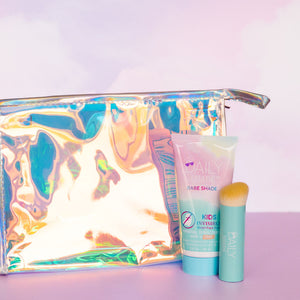
At Daily Shade, we formulate with pure zinc oxide and no uv chemical filters or boosters. This is important for sun protection and overall safety and health of our skin and body. The skin is the largest organ of the body and it absorbs everything we put on it. We need to be paying attention to not only the active ingredients but also the inactive ingredients where amounts do not need to be reported and are therefor unregulated by the consumer.
We would rather create a sunscreen you'll actually want to wear every day than chase meaningless numbers. We focus on what actually matters:
✅ True mineral protection with zinc oxide only (no hidden chemicals)
✅ Broad spectrum UVA/UVB coverage (not just high SPF)
✅ Lightweight, non-greasy texture (so you'll apply enough)
✅ No white cast (so you'll actually wear it)
✅ Transparent ingredient lists (no marketing gimmicks)
We could formulate SPF 100. We could charge more and join the arms race of climbing numbers. But that would be prioritizing marketing over science and that's exactly the kind of deceptive practice we started this company to fight against.
The Bottom Line
SPF 100 sounds impressive. But when you understand the science, you realize you're paying more for essentially the same protection as SPF 50 with a heavier formula, more chemicals, a heavy load of uv chemical boosters and a false sense of security that might actually lead to worse sun safety habits.
Smart sun protection isn't about the highest number on the bottle. It's about:
- Choosing broad spectrum coverage
- Applying enough product
- Reapplying consistently
- Using a formula you'll actually want to wear
Save your money. Skip the SPF 100 marketing hype. Focus on what actually protects your skin.
Ready for honest, science-backed sun protection? [Shop Daily Shade's SPF 30-35 collection—formulated with only zinc oxide and zero marketing tricks.]
