





By Breelyn Vanleeuwen, PA-C | Founder & CEO Daily Shade | Physician Assistant with 15 Years of Clinical Experience
Did you know Utah is the number one state in the entire Nation for new diagnoses of Melanoma (the most dangerous form of skin cancer)? You would think it was Arizona, Florida or California right? But no, it’s here in Utah my home state and the home state of Daily Shade. Why you ask? It's the altitude, elevation, year round sports and the SNOW (which aside from this year, Utah tends to get a lot of) reflects 150% more UV Rays.
Ever wonder why ski patrol slathers on sunscreen even in February? Or why that goggle tan hits so hard after a single day on the slopes? Ski resorts know something most people don't think about until they're dealing with a serious sunburn at 10,000 feet: snow and altitude create a UV exposure situation that's completely different from your average beach day.

The Snow Reflection Problem
Here's the thing about snow: it reflects up to 150% of UV radiation. Compare that to sand at 15%, water at 25%, or grass at 3%.
What this means in practice is you're getting hit twice. UV rays from the sun come down, then they bounce back up off the snow hitting you again from below. Your face, your chin, your neck, even the underside of your nose, all getting exposed to reflected UV that most people never think about.

This is why ski goggle tans are so aggressive and why professional ski instructors who spend all day on the mountain are obsessive about sunscreen reapplication.
The Altitude Factor Nobody Talks About
UV exposure increases approximately 10-12% for every 1,000 feet of elevation gain. Most major ski resorts sit between 8,000 and 12,000 feet.
At 10,000 feet, you're getting roughly 50% more UV radiation than you would at sea level. The atmosphere is thinner, there's less ozone to filter UV rays, and the sun's radiation hits more directly.
Combine that altitude factor with snow reflection and you're looking at UV exposure that's 150% higher than a typical day at lower elevations. This isn't slight, it's a completely different UV environment.
UV Chemical Filters vs Mineral Protection
Most people forget to even think about sunscreen when going skiing or sledding. When people do they grab whatever sunscreen is in their bag. Usually it's a UV chemical filter sunscreen with oxybenzone, avobenzone, or octinoxate or hidden boosters like butyloctyl salicylate, ridecyl salicylate, ethylhexyl methoxycrylene (Solastay), polyester-8 (Polycrylene), just to name a few.
Many UV chemical filters are known to degrade with UV exposure and protection drops over time while you are in the sun, which is exactly what you're getting at altitude. UV chemical SPF absorb UV radiation and convert it to heat through chemical reactions, but that process degrades the filters themselves. The more intense the UV, the faster they break down.
At 10,000 feet with 150% more UV exposure, those chemical filters are degrading faster than they would at sea level.
Why Ski Patrol Uses Zinc Oxide
Talk to ski patrol or professional ski instructors and you'll notice most use zinc oxide based sunscreens. This isn't random. Zinc oxide is more photostable, it sits on top of the skin and physically reflects UV rays, the same way snow reflects them.
Kids on the Mountain Need Better Protection
Children's skin is thinner and more vulnerable to UV damage. At altitude with snow reflection, that vulnerability multiplies. Many parents don’t even think about applying sunscreen because it’s cold outside. Most people don’t understand heat and UV rays are NOT the same. You can still get significant UV Damage in freezing cold weather.

If parents apply sunscreen (first of all GO YOU!) they apply sunscreen once before skiing and assume their kids are covered for the day. At 10,000 feet with 150% more UV exposure those kids are getting significant unprotected exposure. Some of the worst sunburns I have ever seen are on little ones coming off the mountain.
This is cumulative damage that shows up decades later as skin cancer risk. The sunburns kids get on ski trips aren't just uncomfortable, they’re creating cellular damage that doesn't reverse.
With UV chemical filters breaking down faster at altitude, that 2-hour window is generous. Factor in sweating from physical activity, face touching while adjusting goggles, and wind exposure, and you're probably unprotected within 60-90 minutes. It’s important to follow reapplication instructions.
Choose Daily Shade at Altitude
Daily Shade's formulas are non-nano zinc oxide with zero UV chemical filters or boosters. Our ghost-face-free formulas mean no white cast even in the bright mountain sunlight.

Ski resorts know the UV situation at altitude is serious. Snow reflects UV rays and increases UV exposure. Every 1,000 feet of elevation adds 10-12% more UV exposure. At typical resort elevations, you're dealing with 150% more UV than sea level.
Next time you head to the mountains, pack TRUE mineral protection. Your skin and your families' skin will thank you!

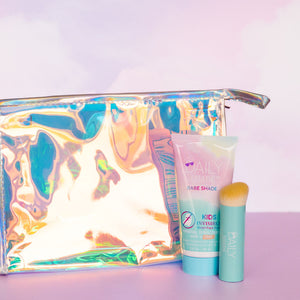
Daily Shade's Babe Shade SPF 30, 20% non-nano zinc oxide, zero UV chemical filters or boosters, Ghost-Face-Free. Protection that works at any altitude.